
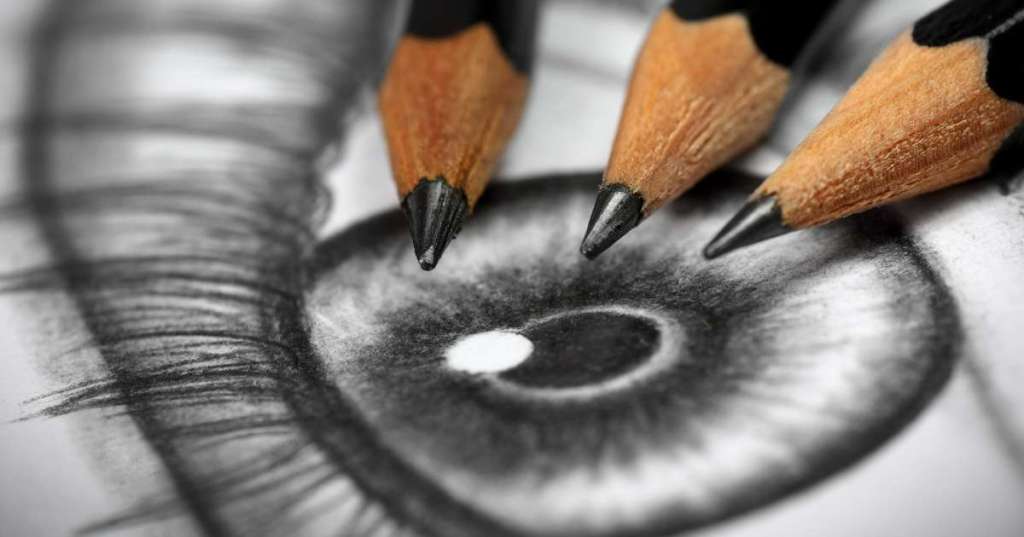
Drawing, one of the most ancient forms of art, serves as the foundation for countless creative endeavors. With minimal tools, artists can bring complex ideas and emotions to life, using techniques that vary widely across different styles and cultural backgrounds. This guide delves into the various methods and tools used in drawing, explores popular artistic themes, and reveals how these themes evolved over time.
Techniques in Drawing and Tools for Creation
1 – Pencil and Graphite Drawing :
Pencils are a classic tool for drawing due to their versatility and range, from soft to hard leads. Graphite pencils, available in varying hardness levels, allow for a broad range of values from light grays to deep blacks. Artists use techniques such as shading, cross-hatching, and stippling to add dimension, and smudging to create softness. Graphite drawing is beloved for its precision and ability to render detail, making it ideal for sketches, studies, and detailed compositions.
2 – Charcoal Drawing :
Charcoal, a material often used in dramatic and expressive drawings, produces rich, dark tones and is perfect for both sharp lines and broad strokes. Charcoal allows for intense contrast and deep blacks, ideal for creating bold, high-impact images. This medium dates back thousands of years, seen in ancient cave art and later developed in Renaissance studies. Today, charcoal remains a favorite for life drawing, as its malleability allows artists to capture movement and anatomy with ease.
3 – Ink and Pen Drawing :
Ink has a long history, originating from early cultures in Egypt, China, and Japan. Using pens, brushes, or reed sticks, ink drawings range from delicate lines to bold brushstrokes. Techniques like line drawing and stippling create texture and depth, while brush pens and dip pens offer expressive line variation. Inking is often associated with comic and graphic novel art, though many artists today use ink for a variety of applications, from architectural sketches to abstract line work.
4 – Colored Pencil and Pastel Drawing :
Colored pencils and pastels bring vibrancy to drawing, ideal for illustrations, portraits, and landscapes. Colored pencils offer precise control, layering, and blending capabilities, while pastels provide soft, rich colors that blend beautifully on textured paper. Pastels have been used since the Renaissance, gaining popularity in the 18th century, while colored pencils became widely available in the 20th century, often favored for their convenience and versatility in layering and shading.
5 – Digital Drawing :
With technology advancing rapidly, digital drawing has emerged as a major art form. Programs like Adobe Photoshop, Procreate, and Corel Painter offer artists endless tools, from customizable brushes to color correction. Styluses and digital tablets enable a natural feel, allowing artists to achieve effects from traditional media, such as watercolor or charcoal, in a digital environment. Digital drawing appeals to illustrators, animators, and graphic designers for its flexibility and versatility.
Popular Drawing Themes and Their Histories
1 – Portraiture :
Portrait drawing captures the essence and emotion of individuals, with roots in ancient societies, such as Egypt and Greece. Portraiture reached new heights during the Renaissance, where artists like Leonardo da Vinci emphasized realism and character. Today, portraits can be hyper-realistic or abstract, with artists experimenting with style and expression to convey emotion and personality.
2 – Nature and Botanical Drawings :
Nature and botanical themes have long inspired artists, from ancient Chinese landscapes to European botanical illustrations. These drawings explore the beauty of plants, animals, and landscapes. Often used for scientific documentation, botanical drawing became an art form with its own expressive style. Modern artists continue this tradition, creating both realistic and stylized representations of nature.
3 – Still Life :
Still life drawings capture objects, often arranged with careful attention to symbolism and composition. Originating from Egyptian tomb paintings, the genre gained prominence during the Renaissance and Baroque periods, where artists used it to explore texture, light, and symbolism. Today, still life drawing serves as both a technical exercise and an expressive art form.
4 – Fantasy and Mythology :
Fantasy themes allow artists to explore worlds beyond reality, drawing from mythology and folklore. This tradition dates back to ancient cultures, with mythological creatures and heroes depicted on pottery, manuscripts, and murals. Today, fantasy themes thrive in modern illustration, particularly in genres like graphic novels and video games, where artists give visual form to imaginary realms and legendary figures.
5 – Abstract and Experimental Drawing :
Abstract drawing focuses on elements of line, shape, and texture rather than recognizable forms. Modern abstraction began in the early 20th century with artists like Wassily Kandinsky, who used drawing as a way to express emotions beyond the visible. Today, abstract drawing encompasses a range of styles and methods, with artists often using unconventional tools or media to explore form and concept.
Conclusion
Drawing as an art form continues to evolve, offering artists countless ways to express their ideas and emotions. From the precision of graphite to the flexibility of digital media, each method opens a unique pathway for creativity. Understanding different tools and techniques, as well as the history behind popular themes, enables artists to experiment and deepen their artistic voice. Whether through realistic portraits, botanical studies, or abstract experiments, drawing remains a timeless medium for creative exploration and expression.
Questions about Making Art through Drawing
1 – What tools do I need to start drawing?
Beginners can start with a simple set of graphite pencils, an eraser, and drawing paper. As you progress, consider adding ink pens, colored pencils, or charcoal for more variety in technique and style.
2 – Can I use multiple tools in one drawing?
Yes! Mixing media like graphite and ink, or using colored pencils over a charcoal base, can add texture and interest. Many artists combine materials to enhance depth, contrast, and detail.
3 – Is digital drawing harder to learn than traditional drawing?
Digital drawing requires learning software and tools, but it offers flexibility and conveniences like undo options. Many artists find that mastering traditional drawing techniques first helps them adapt to digital tools more easily.
4 – How can I improve my drawing skills?
Practice regularly, study fundamental techniques like proportion and shading, and experiment with different styles. Observational drawing from life or photo references is especially useful for developing accuracy and detail.
5 – Why do artists use different hardness levels in pencils?
Different hardness levels produce varying tones and textures. Soft pencils (e.g., 4B, 6B) create dark, bold lines, while hard pencils (e.g., H, 2H) are great for lighter, detailed work. Artists use a range of pencils to build depth and tonal contrast.
6 – How can I choose a drawing theme?
Draw what interests you or experiment with themes like nature, portraiture, or abstract forms to discover your preferences. Studying different themes can also inspire new ideas and techniques to incorporate into your work.
7 – Are there specific techniques for drawing realistic portraits?
Yes, techniques like shading, measuring proportions, and understanding anatomy help artists create lifelike portraits. Using light and shadow accurately also adds depth and realism to portrait drawing.
8 – Do I need to follow any specific style in drawing?
No, finding your unique style takes time and experimentation. Many artists try various styles, from realism to abstraction, to discover what resonates most with them.
9 – What are good exercises for improving line control?
Try drawing smooth, consistent lines and practicing contour drawing without lifting your pencil. Using different hand pressures and drawing from the shoulder can also help improve control and fluidity in your lines.
 irocolors.com